
My Theory of Writing
"What is Writing?"

I’ve thought about this question a lot as my roles have changed from student to instructor. But as I plunged deeper into my personal study of writing, I became aware that it is extremely difficult to pin down the act as a single thing. There are a few key components, sure, the mechanical behavior, the use of process, the recursive nature—all part and parcel of what goes into the battle with the blank page. But those aren’t the only elements to consider.
There’s also the subjectivity of the writer’s relationship to writing. Some use it as a creative outlet, or as a way to organize their thinking. Some people use it to create new knowledge or challenge the status quo. Others take to journaling as a way of understanding the inner workings of their emotional landscape. And that doesn’t even begin to scratch the surface of the ways in which writing can be used. Knowing that, suddenly the simple question of what writing is takes on enormous complexity.
Writing As A Toolbox
From my perspective, however, I believe that writing should be understood in terms of the utility it offers the writer. If you’ll excuse my analogy, I think of it like a toolbox. Inside that box is everything from grocery lists to academic papers to the great American novel. Once a writer learns to use the tools in the box, they can then call upon those tools of as a means of accomplishing something.
If we take that metaphor a bit further, we can also consider that the tools inside the box of a carpenter might be slightly different from the tools of, say, an auto mechanic. The same can be said about the tools of writing used by academics versus those of poets. Still, there are some commonalities. We can consider those commonalities as the container in which our writing tools are housed. In other words, they are our box. And for me, this box starts with viewing writing as both a practice and a process.

Writing As a Process, Not a Product
It’s not a new idea that writing can be looked at as more than just the final draft of a piece. In his 1972 article, Teaching Writing as a Process Not a Product, scholar Don Murray suggests that writers engage with writing on the process level as a method of “discovery though language” (Teaching 2). The key word being “discovery.” When writers stop thinking about their writing as an endpoint, they can start to see it as something that can consistently be improved.
This shift in thinking alleviates the pressure to create perfect end products and is replaced by writing in various stages of construction. Murray hints at this idea when he mentions the “glory of unfinishedness [sic]”(Teaching 2). Within that statement, there’s also the implication that focusing on the process can be an enjoyable activity in and of itself.
Writing As A Practice
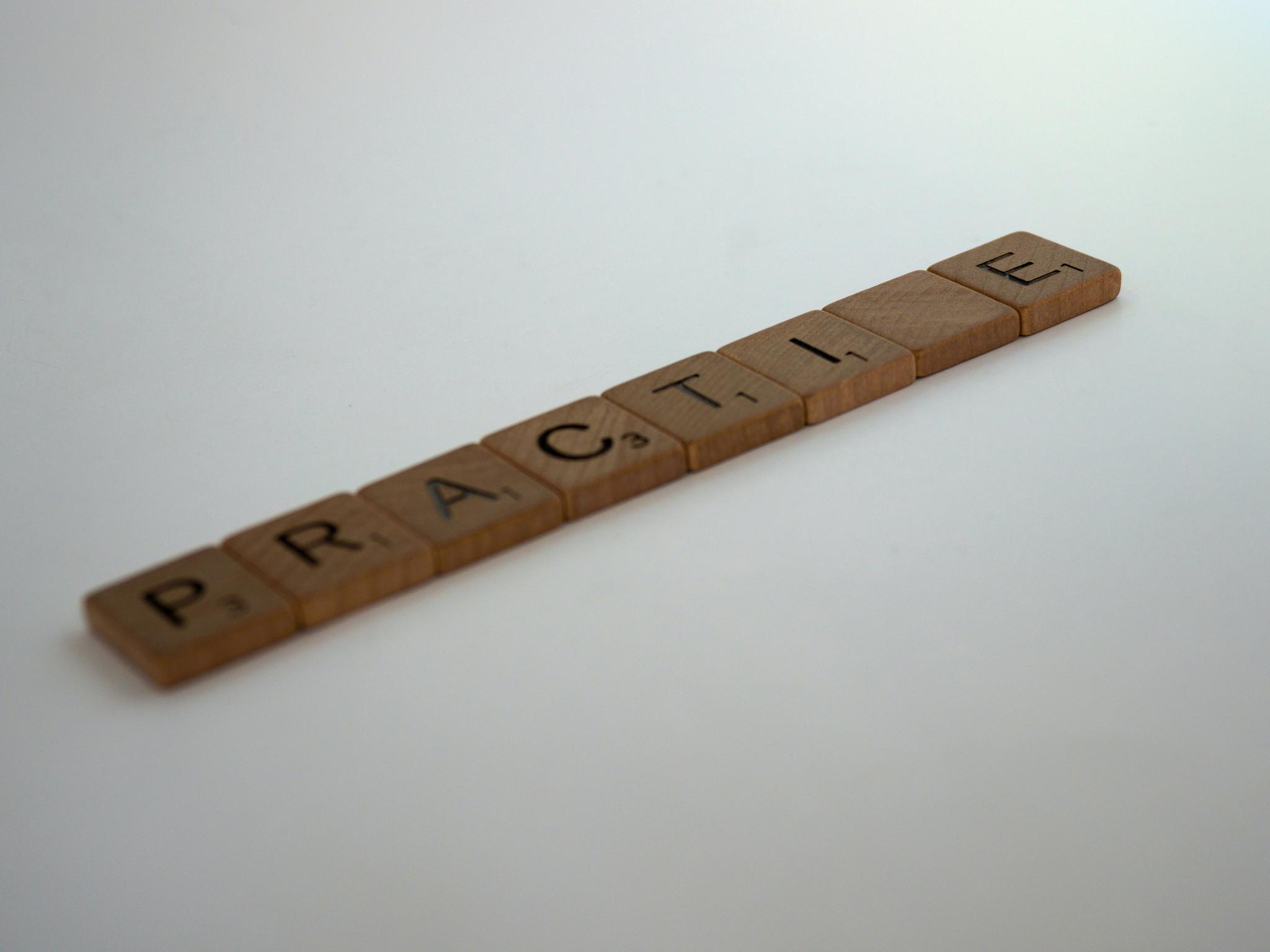
Moreover, writing is a practice. Consider it similar to a sport or a martial art. Through practice, the writer learns to evaluate the effectiveness of their process based on continual feedback. But feedback isn't as important as writers getting their reps in.
Scholar David Russel acknowledges this theory in his research on the process of revision. He states: “Change…is accomplished through…activity, whether cooperative or conflictual.” (Activity 55) In other words, treating writing as a practice further bolsters the student's writing ability.
The Fundamental Tools of Genre, Audience, and Purpose

At the most general level, writers also need to understand the concepts of genre, audience, and purpose to establish the foundation for their "toolbox." These three concepts are the general purpose hammer, screwdriver, and pliers. While each is unique, so too are genre, audience, and purpose. Fundamentally, these three concepts are useful for the qualification of the type of writing being created.
When it comes to literal tools, a hammer is useful when you need to hang a painting, but almost worthless as a tool to hold a stripped bolt. Like the hammer, genre is a worthwhile consideration when tasked with creating something that operates under specific constraints.
If your boss asked you to write a business letter, for example, you probably wouldn’t want to write them a grocery list. Understanding genre helps students demystify the type of writing--in this case, academic--that professors require.
Moreover, writing is almost always designed to do something. The purpose of a novel might be to entertain. A manifesto might be useful to establish a social or political identity; a proposal, to generate some type of buy-in.
Finally, the need to understand the expectations of an audience is a key for any writer. Writing a formal business letter to say happy birthday to your grandmother would be ridiculous. That's just not the right audience for that sort of writing. So, too, would be using textspeak in a formal job application.
There are more tools than just these, of course. But already we’re starting to see how things can quickly become complex.
Works Cited
Murray, D., “Teaching Writing as a Process Not a Product”, The Essential Don Murray: Lessons from America's Greatest Writing Teacher, Heinemann, 2009, pp. 1-5
Russel, D. “Activity Theory and its Implications for Writing Instruction”, Reconceiving Writing, Rethinking Writing Instruction. Ed. Joseph Petraglia. Erlbaum,1995 pp. 51-78.
